

THE 2026 HURRICANE FORECAST: KNOW WHAT COULD BE COMING YOUR WAY!
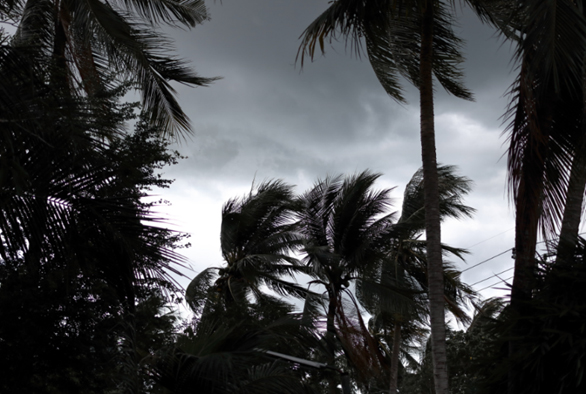
A new hurricane season brings a familiar question: are you ready if the chaos crosses your path? While no two storm seasons are the same, your priority remains unchanged – to protect what matters most. Hurricanes don’t have to make landfall where you live to disrupt your routine – or your life. The highest-frequency areas for hurricanes of any category include coastal North Carolina, south Florida and southeast Louisiana, about every five to seven years.
The best time to prepare for a storm is well before it happens. Stay ahead of any weather event with the supplies and information you need to keep you and yours ready for anything.
SOME USEFUL TIPS:
• Photograph your expensive possessions
• Check your Carbon Monoxide and smoke alarms are fully functional.
• Ensure you have an emergency medical kit, and things like flashlights, radio that does not require electrical power, food items that do not require refrigeration and water.
• Make sure you have any pharmaceutical or other medical products you take with around a month’s supply.
• Remember food in your refrigerator is only safe to eat for about 4 hours without electricity. Beyond that, the recommendation is to discard meat, poultry, fish, eggs and leftovers.
• A full freezer will hold a safe temperature for 48 hours (24 hours if half full). These times are only true if the appliance door remains closed.
• Help keep children as calm as possible before, during and after a hurricane with a little guidance and reassurance to ease fears and stress.
○ Talk about your safety or evacuation plans before a storm arrives.
○ Let them help gather supplies and feel part of the process. Keep in constant communication during a storm or hurricane. Talk through what you’re experiencing and share your plans for what happens after the storm.
○ Pack water, snacks and first aid items including bandages and antibiotic ointment. Include toys, games and other comfort items that don’t require power.
You can check out the complete article by accessing the following link https://wp.me/pgats9-bZV
HOW DID WE GET HERE?
TRANSPORTATION IN ESTERO & SOUTHERN LEE COUNTY
TERRY FLANAGAN, VICE PRESIDENT OF ADMINISTRATION, ENGAGE ESTERO
On April 17, more than 130 residents packed the room for Engage Estero’s transportation forum. Lee County Metropolitan Planning Organization Executive Director Don Scott opened with a question. He asked, “How many of you have moved here in the past five years?”
About half the audience raised their hands. That moment captured the essence of Estero’s traffic challenge. Today’s congestion did not happen by chance. It stems from deliberate policy choices made more than a decade ago as Lee County worked to recover from the devastating 2008–2010 housing crash, during which the area led the nation in foreclosures.
The result is a significant backlog of required road projects. Lee County’s three-tier transportation project list totals roughly $2.5 billion in today’s dollars, and the cost is far higher when future inflation is considered. Yet only about $70 million per year is available for new capacity projects. Traditional funding sources, including the already-maxed-out local gas tax and impact fees, cannot bridge this gap.
In the full article written by Terry Flanagan, VP, Administration, he explains what this means for those living in Greater Estero. See the link at https://esterotoday.com/transportation-in-estero-southern-lee-county/.
ESTERO RESIDENTS DESERVE ANSWERS REGARDING THE I-75 PLANNED EXPANSION
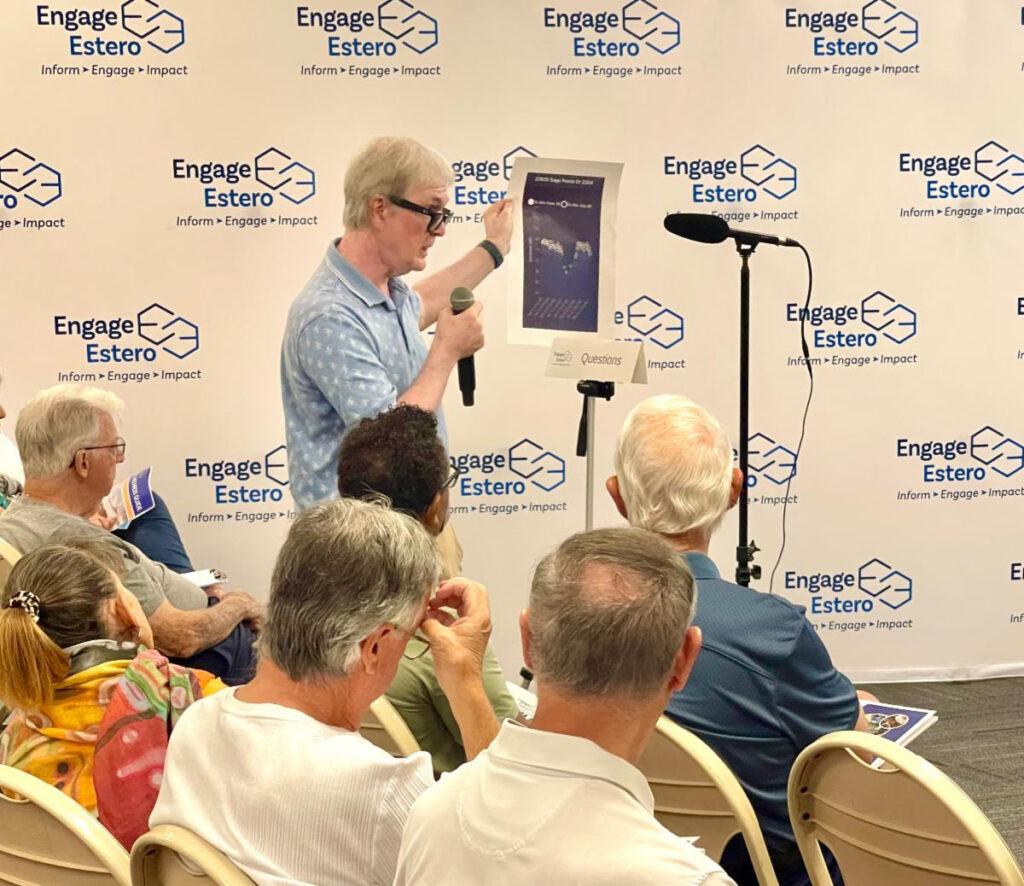
At Engage Estero’s April 17 Community and Member Meeting, over 130 residents gathered to discuss one of the most pressing issues facing Greater Estero: traffic congestion, future road improvements, and the planned widening of I-75 through the community. The meeting focused on transportation updates, the impacts of future development, and the long-term expansion of the interstate corridor.
Watch the full April 17 Engage Estero Community and Member Meeting on YouTube.
The strong turnout reflected how deeply these issues affect daily life in Estero. Traffic congestion affects commutes, school travel, emergency response times, and local businesses. Major highway construction affects mobility, safety, noise levels, and the character of surrounding neighborhoods. For many residents near I-75, this is not simply a transportation project; it is a quality-of-life issue that could affect health, property values, and the future of their communities.
Residents expected FDOT to provide updates on the I-75 expansion, explain what it had learned from community feedback, discuss noise mitigation options, outline project timelines, and answer public questions directly. These topics had been identified in advance. Instead, attendees were informed at the start of the meeting that FDOT representatives would not attend. This they conveyed to Engage Estero less than 48 hrs before the meeting.
The concerns expressed by a large group of residents was recorded and sent to FDOT. WINK News referenced the meeting in various news bulletins emphasizing FDOTs withdrawal from the meeting despite making the point that their mandate was to understand the views of the public. Other reports of the meeting were published in the Fort Myers News Press, Naples Dailey News and the Banner.
https://esterotoday.com/apr2026
POTENTIAL PLANS FOR ESTERO RIVER PARK
During a Workshop session on May 6, 2026 at the Village of Estero Council meeting, updated plans for the Estero River Park project were presented.
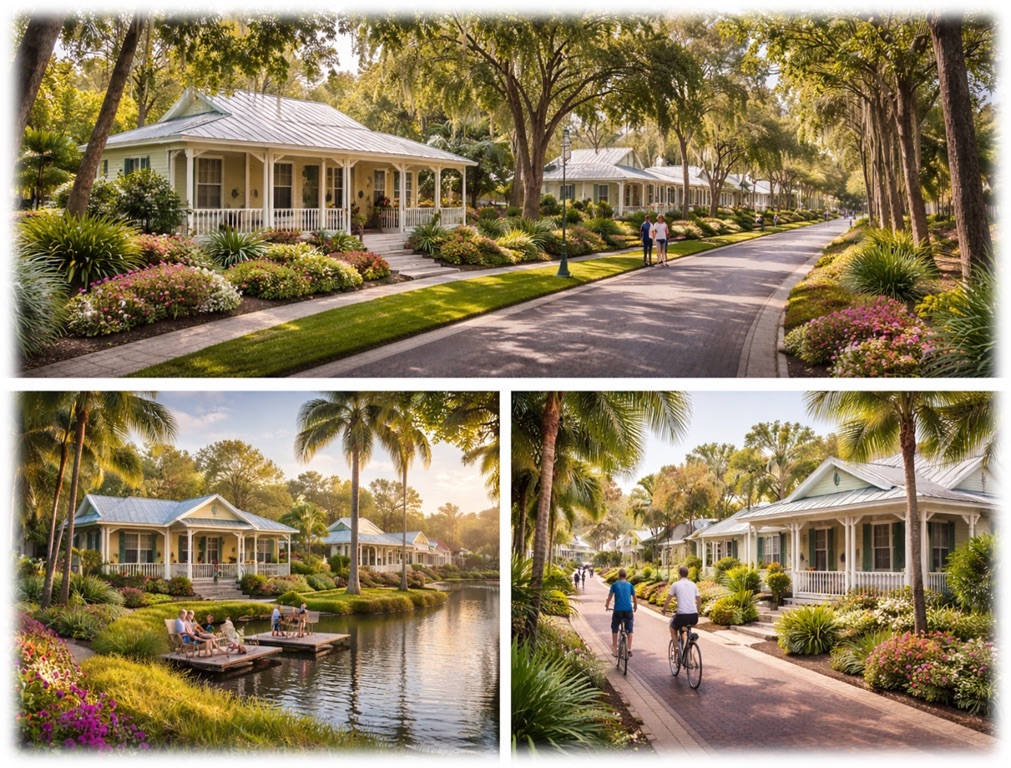
“The Village is advancing the strategic redevelopment of the ±32-acre publicly owned site within the Eco-Historical Hub located north of the Estero River. This initiative envisions the creation of a vertically integrated mixed-use development anchored by multifamily residential and activated by complementary ground-floor retail and neighborhood-serving commercial space.
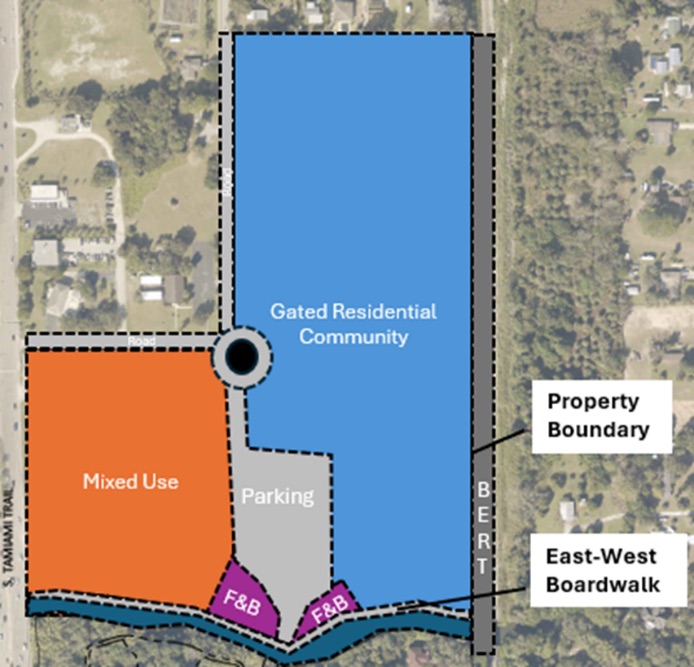
The project is intended to leverage public land ownership as a catalyst for long-term private investment and deliver a cohesive, walkable urban environment.
The proposed east-west boardwalk along the Estero River allows for a scenic, walkable site allowing visitation to the food and beverage (F&B) elements while connecting users to the western trail and BERT line.
The parking portion of the site completed construction in May of 2026 and will be available to the general public, supporting access for all visitors to the site and surrounding amenities. The additional illustrated site uses are still very much preliminary; the Village is open to alternative development options from proposals that would best fit the long-term vision for the site.”
“By combining residential living with neighborhood-serving commercial spaces, the development would promote walkability, daily activity, and year-round economic engagement. The project is positioned to function as a catalytic investment that strengthens the development and supports long-term community growth through collaboration between public and private stakeholders” The full article with the slideshow presentation can be seen at https://wp.me/pgats9-bZA