


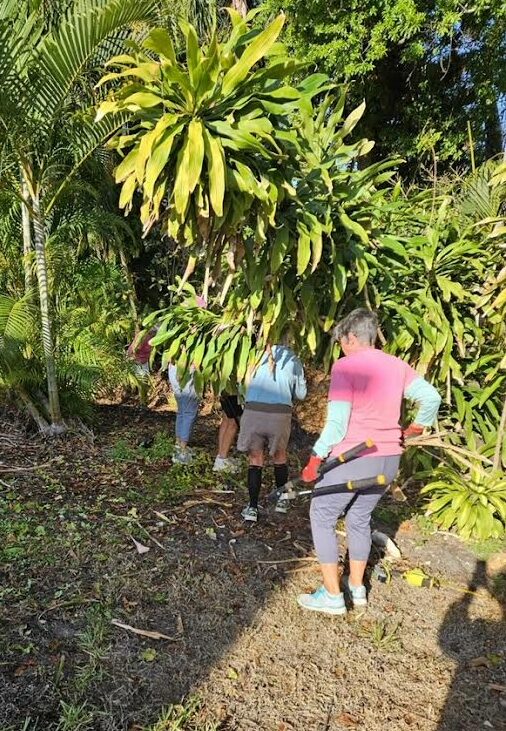

The recent drought has been tough on Country Creek’s trees and shrubs, but good for cleaning out our swales. These shallow channels are built to manage storm water by slowing and capturing runoff. Swales help reduce erosion, filter pollutants and hydrate soil rather than allowing water to pool.
Villages at Country Creek paid landscapers last year to thoroughly clean out the long swale behind condo buildings 2 through 6. Workers removed dead trees, trimmed branches and shrubs and cleared out several truckloads of debris. The Deadheaders re-visited this area during March, removing approximately 40-50 cartloads of downed palm fronds and tree branches from the swale. In addition, Deadheaders removed strangler vines wrapped around swale trees. Strangler vines (such as English ivy, bittersweet or wisteria) eventually kill trees by blocking sunlight, stealing nutrients, girdling trunks and adding dangerous weight. These vines also create a “sail” effect that increases the risk of downed trees during storms, while also causing structural damage and harboring pests.
Landscapers brought in to remove a Ganoderma-infected tree from the swale pointed out a nearby burrow that they believed to be a rattlesnake nest. Rattlesnakes like palmetto thickets and often nest in tortoise burrows, so if you see animal holes in the swale, please don’t go near them.
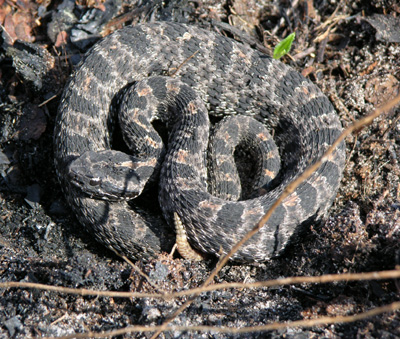
Southwest Florida is home to both Eastern Diamondback rattlesnakes and pygmy rattlesnakes. Diamondback rattlesnakes are large (6 to 8 feet long) and have loud rattles, but the tiny rattles of the much smaller pygmy rattlesnake (12 to 24 inches long) are often mistaken for a buzzing insect.