


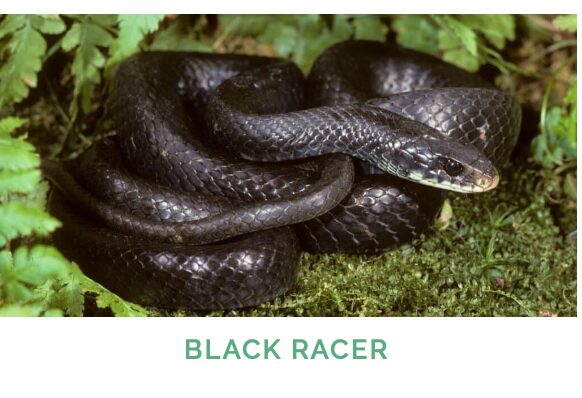
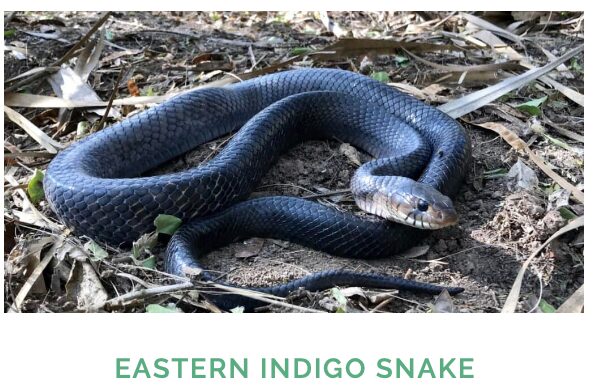
The black snakes that we usually see here in Southwest Florida are Black Racers. However, they are often confused with the Eastern Indigo Snake, also native to this part of the state.
The biggest difference between indigo snakes and black racers comes from their weights. Black racers weigh only 1-2 pounds, while eastern indigo snakes weigh between 4-10 pounds. Eastern indigo snakes are bigger and heavier than black racers. While both are mostly black, indigo snakes have orange-colored throats, while black racers have white-colored throats. Neither species are venomous, though they both mimic the dangerous species of snakes when threatened.
More specifically,
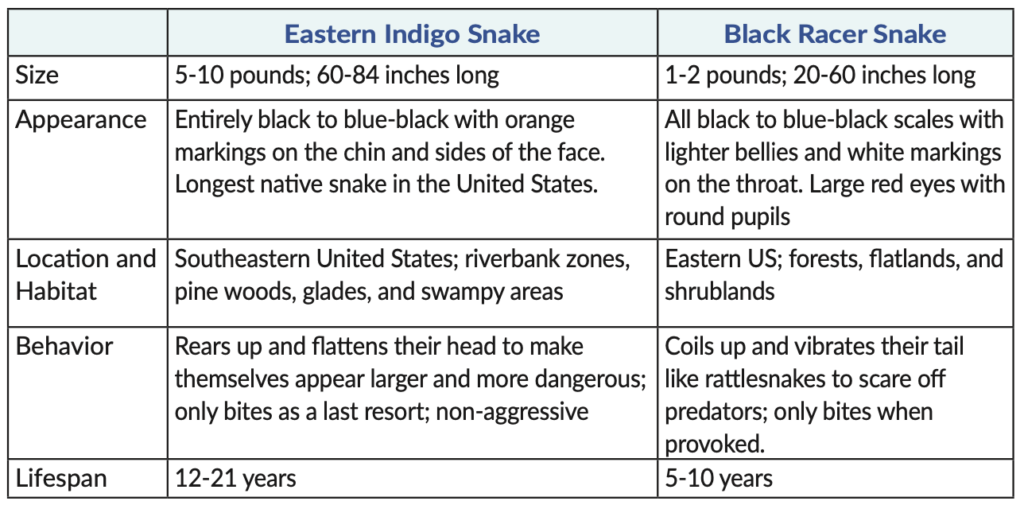
Both snakes are active only during daylight hours. Eastern indigo snakes love the water and are commonly found near fresh water. On the other hand, black racers tend to frequent shrublands, flatlands, forests, and the edges of urban and suburban areas. Adults of both species look similar, but indigo snakes and black racers look very different when they’re babies. Juvenile eastern indigo snakes look very similar to adults; they’re black with orange throats. But baby black racers start as light brown snakes with darker brown patterning and may be confused with pygmy rattlesnakes. As they age, they darken in color until they attain their true black scales.
Black racers eat everything from insects to fish to bird eggs. They are also known to eat amphibians, small mammals, and birds. Eastern indigo snakes are particularly known for eating other snakes, even the venomous rattlesnake.
The eastern indigo snake is a threatened species limited to fragmented populations in Central and South Florida. The black racer is common and generally considered non-threatened except in some northeastern states.
Notes:
A-ZAnimals.com; UF Wildlife-Johnson Lab (Department of Wildlife, Ecology and Conservation); Florida Museum of Natural History; Florida Fish and Wildlife Conservation Commission