

ANHINGA
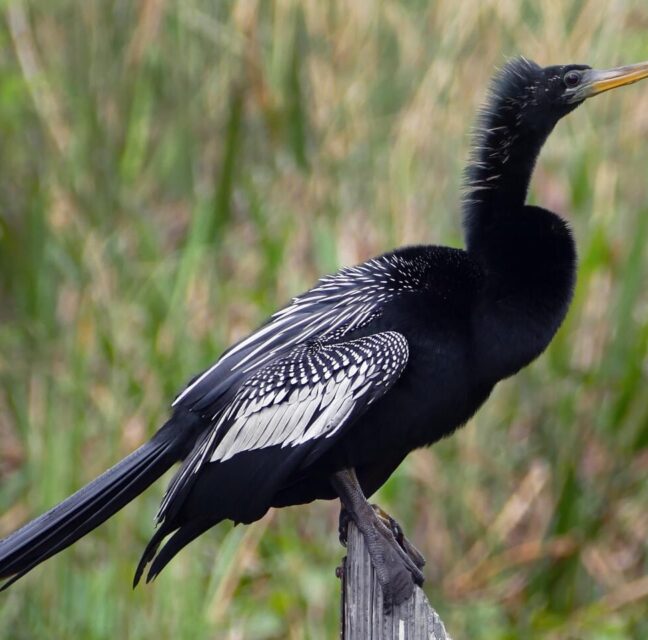
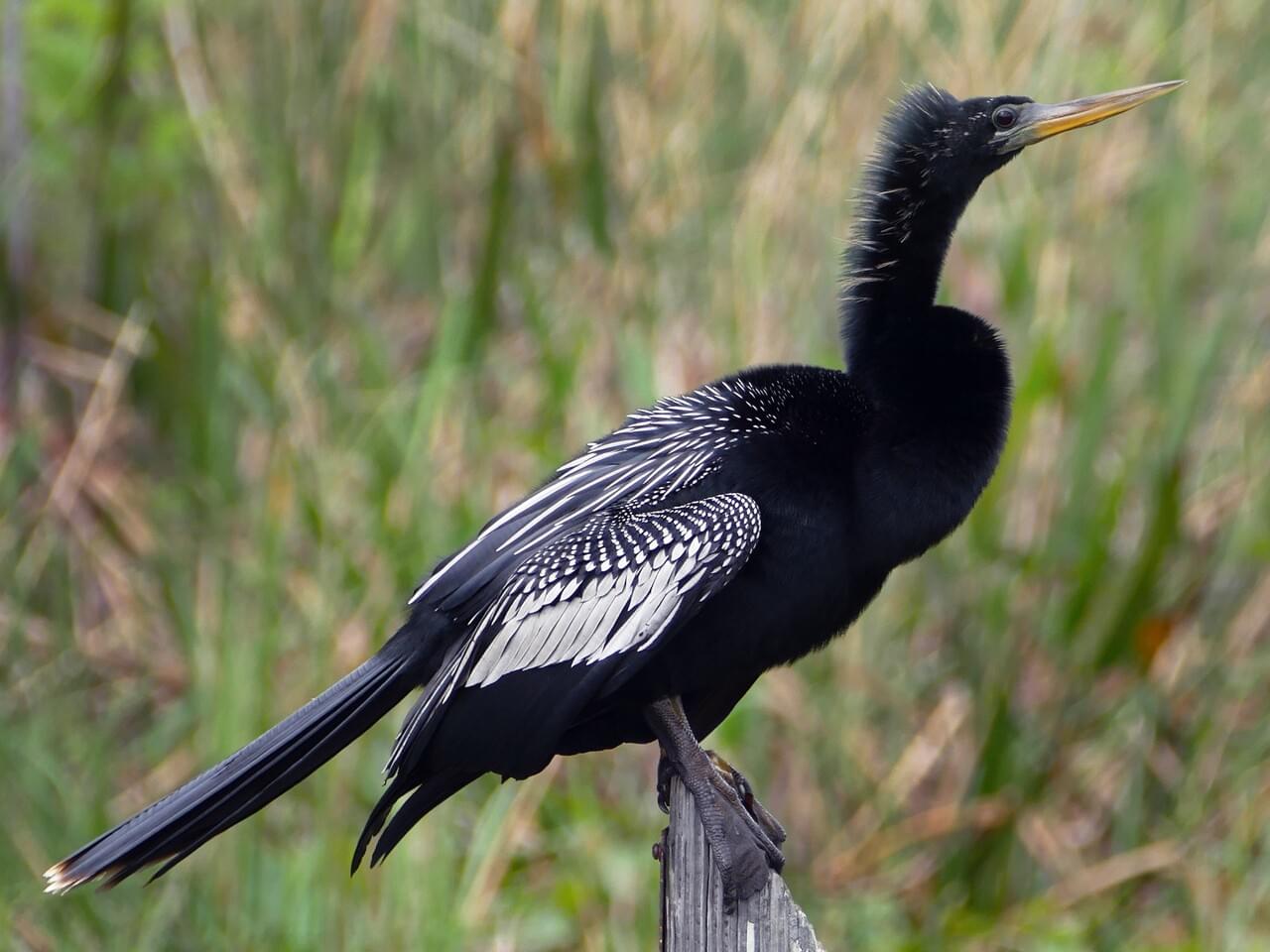
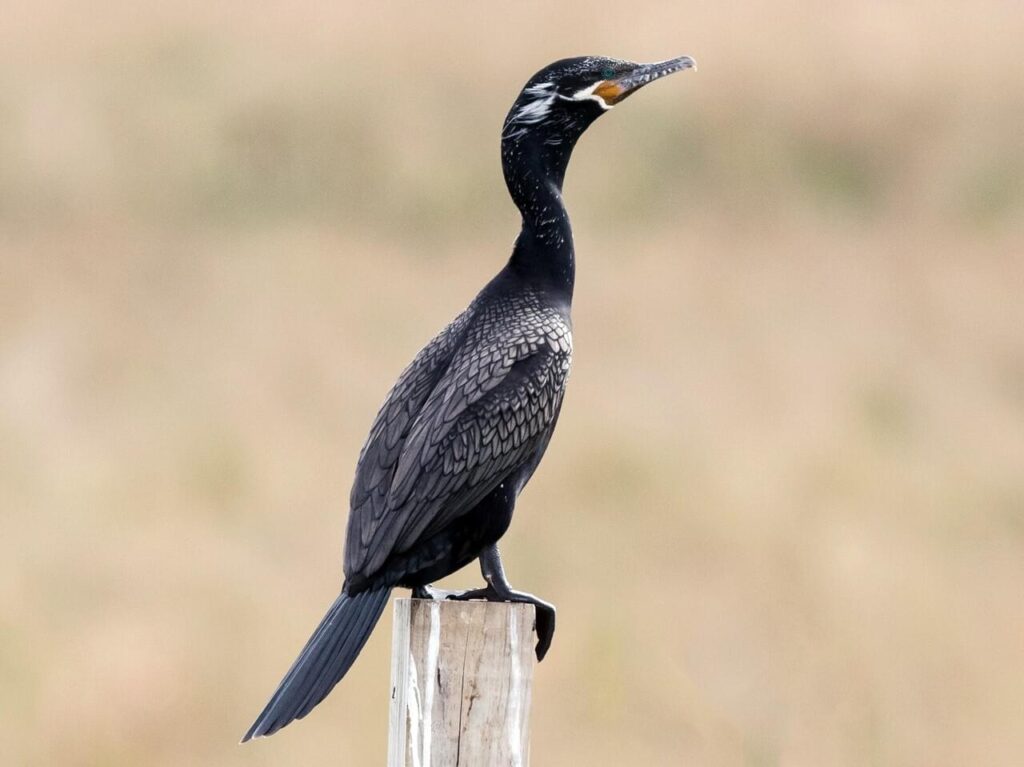
Anhingas and cormorants are both large black aquatic birds often confused for each other, but they have distinct differences. They are similar in size (somewhat smaller than a goose) with wingspans from 3.7 to 5 feet, the cormorant having the larger wingspan. Anhingas are known for their long, slender necks and pointed bills, while cormorants have shorter, thicker necks and hooked bills. Anhingas often swim with their bodies submerged under the water. The anhinga stretches its head and neck out of the surface of the water. When its head and neck are stretched out, it looks like a snake is gliding through the water, hence the nickname “snakebird.” Cormorants, on the other hand, though their bodies are heavy, swim with their bodies more above the water, like a duck.
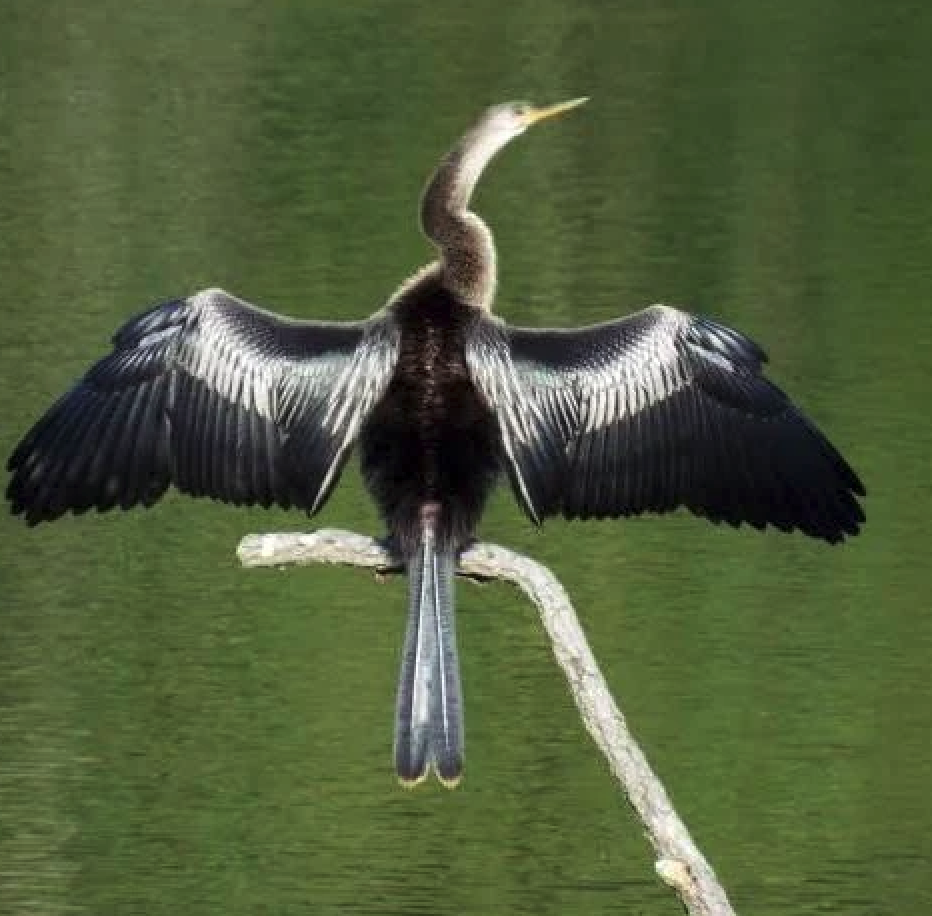
Male anhingas have grayish-black feathers with a greenish shine to them with the upper body spotted or streaked with white. The female has a tan head, neck, and chest, and black stomach. The anhinga has poorly developed oil glands, and its feathers aren’t as waterproof as the feathers of other water birds. It perches in a tree with its wings open to dry its feathers and warm its body.
Using its sharp bill, the anhinga spears fish, flips them in the air, and swallows them head-first! Sometimes, the anhinga spears a fish so hard that it has to return to shore with the fish still stuck on its bill. The anhinga bangs the fish against a rock to get it off its bill.
In flight, they soar high in the sky, using thermals like raptors. Anhingas are plentiful in freshwater habitats like lakes, rivers, and swamps. Anhingas are year-round residents of Florida. Cormorants migrate.
The cormorant is a large, dark-colored bird with a long neck and a hooked bill. Adults have a distinctive bright orange patch of skin around the face and brilliant blue eyes. Their neck is shorter and thicker than an anhinga. They are typically dark all over, often with a yellowish gular pouch—a specialized expandable area of skin found on the throat.
Cormorants inhabit both marine and inland waters throughout Florida and swim with more of their body above the water, like a duck. They are well known as fish-eaters, although they also readily consume other small animals. Using its strong bill the cormorant grabs fish and swallows them whole. Cormorants are social birds and can often be seen on open water in flotillas of a dozen or more.
In flight, they flap their wings rapidly when flying low over the water and sometimes can be seen flying with others in a loose “V” formation. In certain areas they may be seen perching on utility wires or small branches.
Notes: Cornell Lab All About Birds, Natureworks, Florida Fish and Wildlife Conservation Commission