


Recently, a VCC resident discovered a banded snake dead in the roadway. He thought it was a coral snake and was disturbed because coral snakes are highly venomous. With a little research, however, it was discovered that the snake was actually a king snake, a nonvenomous variety. The following is taken from https://howstuffworks.com/snakes/coral-snake-vs-king-snake.htm.
At first glance, the coral snake vs. king snake distinction can seem borderline impossible. But these two reptiles are worlds apart in terms of how they live, hunt and defend themselves. Both are colorful and slithery and live in the wilds of North America, but one is venomous, while the other is an expert mimic.
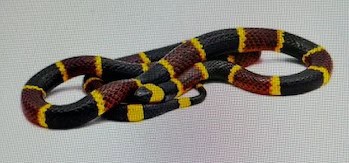
The vibrant coral snake has potent venom. New World coral snakes—native to North, Central and South America (like the eastern coral snake found in the U.S. for example)—have a distinct color pattern: bright red bands, yellow bands, and black rings that alternate along their body. Coral snakes deliver their toxins through small but effective fangs. When a coral snake bites, it uses a powerful neurotoxin that can paralyze its prey, affecting the nervous system and quickly shutting down vital functions. They typically feed on small snakes, lizards and frogs. Though coral snake bites are rare in humans due to the snake’s reclusive nature, bites require immediate attention if they do happen. Coral snakes live in various habitats, from sandy areas in southeastern United States to tropical forests in Central and South America. You can find the eastern coral snake in places like southern Florida. Other New World coral snakes roam Central America and Mexico.
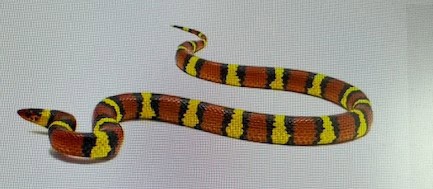
King snakes are nonvenomous but they bear a striking resemblance to the coral snake. Scarlet king snakes in particular, look like coral snakes with their red, black, and yellow bands. King snakes are constrictors which means they kill their prey by wrapping around it and squeezing tightly until the animal can no longer breathe. While they eat small snakes, lizards and rodents, they can kill and eat venomous snakes, including coral snakes. Their resistance to venom makes them a top predator in the snake world, earning them the name “king” snakes. These adaptable snakes live across North America thriving in forests, grasslands and even deserts. There are many different king snake species, such as the scarlet king snake that inhabits the southeastern U.S. and the California king snake which lives out west. They lay eggs, which hatch into small replicas of the adults, ready to start hunting and mimicking other venomous snakes from a young age.
Here are a few differences between these critters.
• Coral snakes are venomous while king snakes are not. If you’re ever in doubt, check their color patterns closely. Coral snakes have yellow bands touching red bands, while king snakes have red bands touching black.
• Coral snakes use venom to paralyze their victims. While king snakes use construction to suffocate them. Their diets overlap a bit since both species eat small snakes and lizards, but king snakes have the added ability to prey on venomous snakes including coral snakes, thanks to their resistance to venom.
• Coral snakes are a bit more reclusive and live in more tropical or warm environments like southern Florida, while king snakes have a wider range and live across North America.