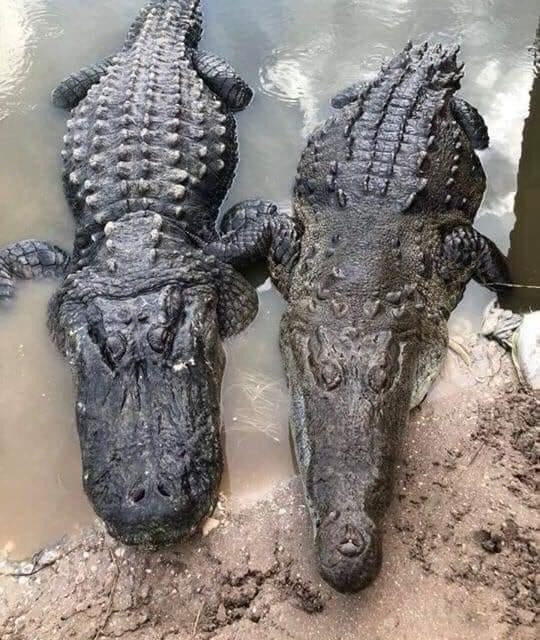


ALLIGATOR AND CROCODILE
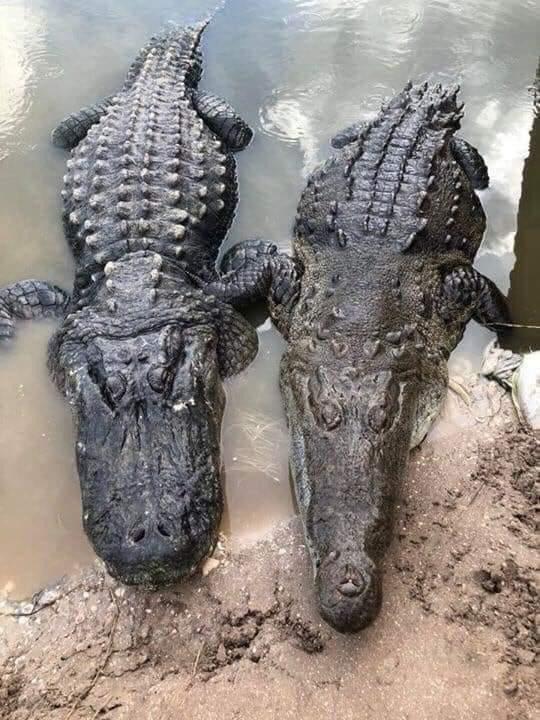
The difference between alligators and crocodiles is often easy to spot once you get the hang of it. Alligators are dark colored with a broad, rounded snout and are usually found in fresh water. Crocodiles are grayish-green and prefer coastal, brackish and salt-water habitats. They have a narrow, tapered, triangular snout. Also, the fourth tooth on either side of the lower jaw of an alligator fits into an internal socket in the upper jaw so that these teeth are hidden when the mouth is closed. In a crocodile, the fourth tooth is always exposed. South Florida is the only place in the world where both alligators and crocodiles exist in the same habitats. The American alligator is listed as a threatened species and the American crocodile as endangered.
ALLIGATORS
Never mind that the official state animal is the panther: If there’s one iconic Florida critter it’s the alligator, not to be confused with crocodiles. These ancient beasts are found in every Florida county. In backyard ponds, in canals lining the streets and even in the streets themselves. (The I-75 corridor between Naples and Miami is aptly called Alligator Alley.)
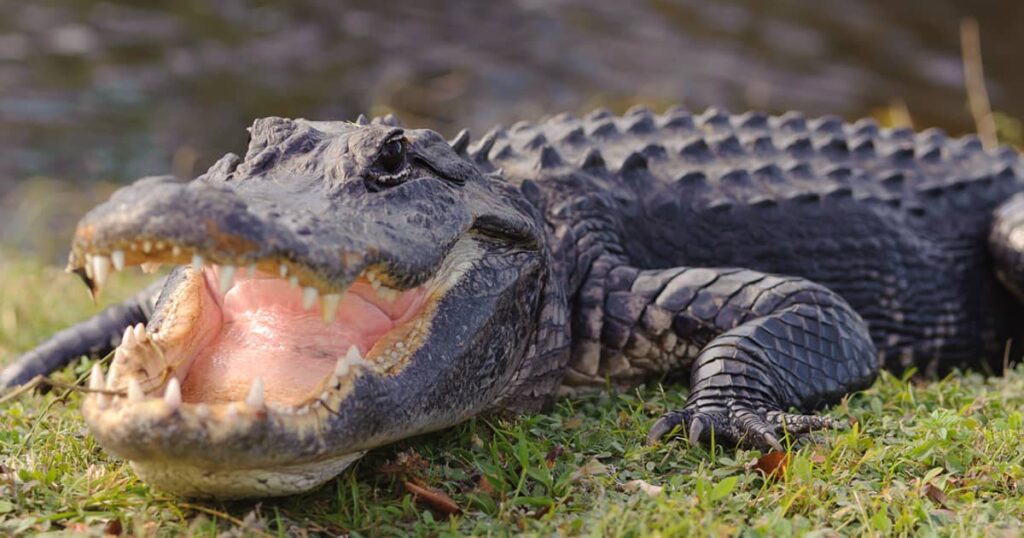
The American alligator is one of the largest reptiles in North America. The name alligator comes from early Spanish explorers who called them “el legarto” or “big lizard” when they first saw these giant reptiles. Males rarely exceed 13 feet in length and can weigh well over 500 pounds. The Florida state record for length is a 14-foot 3½-inch length male from Lake Washington in Brevard County, and the record for weight is a 1,043-pound male from Orange Lake in Alachua County. It’s estimated that 1.25 million alligators lie in Florida’s fresh waters and estuaries.
Female alligators lay from 35 to 60 eggs in a nest usually near isolated ponds in interior marsh habitats. They build the nest by pulling marsh vegetation into a mound that may be several feet high and up to 10 feet across. They cover the eggs with vegetation from the nest. As the vegetation decays, it creates heat to incubate the eggs—the temperature of the nest determines the sex of the hatchlings with warmer temperatures favoring males. Young hatchlings begin snapping up insects soon after birth, and as they grow, they include crawfish, small fish, frogs and eventually add larger animals such as crabs, larger fish, frogs and small birds to their diet. An adult’s diet includes muskrats, nutrias, beavers, raccoons, large birds, and fish, snakes, turtles, and deer—basically anything that can’t eat them first.
Alligators are ectothermic (cold blooded). They regulate their body temperature by basking in the sun or moving to areas with warmer or cooler air or water temperatures. They are most active when temperatures are between 82° to 92° F. They stop feeding when the ambient temperature drops below approximately 70° F, and they become dormant below 55° F. Alligators are dormant throughout much of the winter. During this time, they can be found in burrows that they construct adjacent to an alligator hole or open water, but they occasionally emerge to bask in the sun during periods of warm weather. Alligators in the wild can live up to 70 years; some in captivity may live even longer.
CROCODILES
Florida is the northernmost range for the crocodile. According to the Florida Wildlife Service, crocodiles exist in Brevard, Broward, Charlotte, Collier, DeSoto, Hillsborough, Indian River, Lee, Manatee, Martin, Miami-Dade, Monroe, Palm Beach, Pinellas, Sarasota, and St. Lucie counties. They live in brackish or saltwater areas and can be found in ponds, coves, and creeks in mangrove swamps.
The American crocodile has 30–40 teeth in its upper jaw and 28–32 in its lower jaw. When the mouth is closed, several upper and lower teeth are visible outside the mouth, the most prominent commonly being the fourth tooth from the front in the lower jaw. Usually solitary, the reptiles bask in the sun for most of the day and then enter the water during the evening to hunt. During the warmest months, many crocodiles dig burrows to hide from the day’s heat. Adults have a broad diet that ranges from insects and small invertebrates, such as crabs, to fish, turtles, frogs, birds, and mammals (including dogs). Attacks on people are rare, and they are often provoked. Young crocodiles prey on smaller items, such as small fish and crustaceans. Adults have no natural enemies other than people who hunt them. However, the eggs are eaten by raccoons, skunks, and other small mammals, and juveniles sometimes fall prey to large fish, feral cats, and even adult crocodiles.
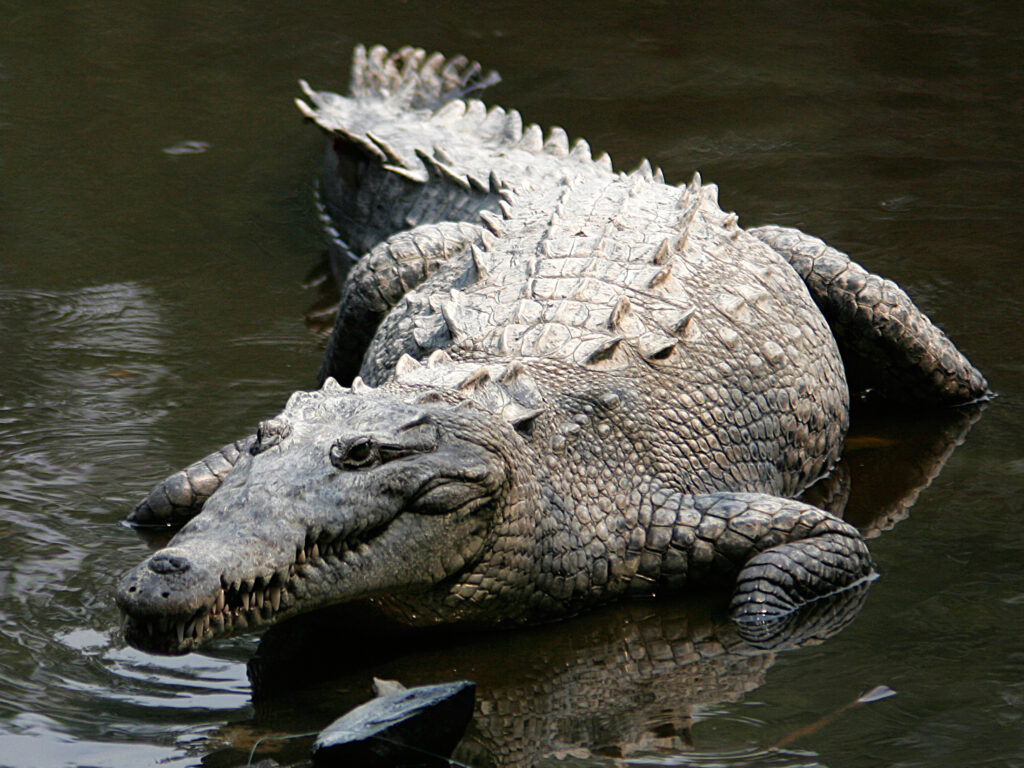
Adult male crocodiles are larger than females and can reach lengths of nearly 20 feet and may weigh close to 2,000 pounds. The average lifespan is about 45 years.
American crocodiles are ecologically important as predators. They help the environment by controlling some over-populated fish species that may cause an imbalance in the aquatic ecosystem. Unfortunately, the American crocodile and other large carnivores that live in coastal zones are at risk because rapid development causes a domino effect for future imbalances in the ecosystem. Humans are a crocodile’s main threat, having hunted them for their skin since the 1930s. Today, the occurrence of crocodile hunting has decreased due to their protected status, but habitat loss and the increasing human population are an on-going struggle for American crocodiles.
Notes: United Parks and Resorts, Seaworld.org, Britannica.com, Louisiana Wildlife and Fisheries, Florida Fish and Wildlife Conservation Commission