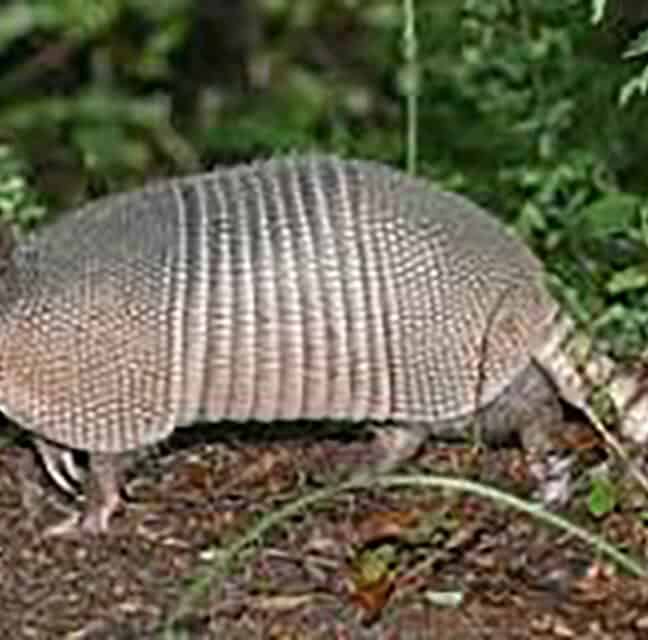


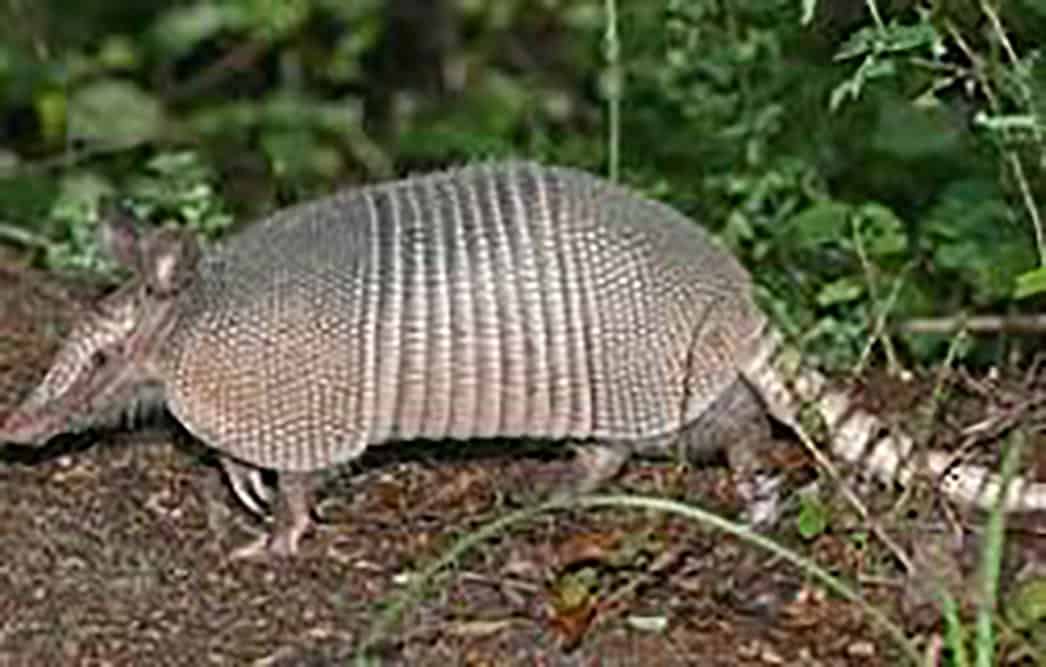

The only armadillo in Florida is the nine-banded armadillo so named because of the segmented center section of the animal’s body. Armadillos (Spanish for “little armored ones”) were introduced to Florida in the early 1900s and are now considered naturalized. Early German settlers in Texas referred to armadillos as “Panzerschwein,” which translates to “armored pig” in English reflecting the armadillo’s tough, armorlike shell. They are closely related to sloths and anteaters and have a pointy or shovel-shaped snout and small eyes. These little armored mammals are actually good swimmers when they need to be. They can hold their breath for up to six minutes and are really skilled at walking underwater to cross streams.
Armadillos are insectivores. They mostly eat bugs, beetles, grubs, worms, spiders and termites. They favor forested or semi-open areas with dense ground cover and loose, sandy soil, which allows them to easily burrow. They are mostly active at night, and their long claws can cause damage to lawns, gardens, and landscaping. Armadillos dig burrows for their homes or to escape predators, and a single armadillo can have several different burrows with multiple entrances. To reduce armadillo damage to your lawn, keep watering and fertilization to a minimum. Moist soil and lush vegetation bring earthworms and insect larvae to the surface of the soil. Also, watering gardens in the morning is preferable since the soil can dry out in the afternoon and not be as easily detected by nocturnal armadillos.
Nine-banded armadillos nearly always have litters of four babies, identical quadruplets (either all male or all female). Armadillo babies look very much like adults but are smaller and softer than their armored parents. When startled or scared, armadillos can jump four to five feet high. Usually, this surprises any creature trying to have it for lunch. Unfortunately, this doesn’t work so well when startled by a moving car, which is why they are common roadkill.
Although armadillos are pretty healthy for wild animals, they are connected to leprosy (also known as Hansen’s Disease). They don’t carry many common parasites, and rabies in armadillos is very rare, but there is some danger of them transmitting leprosy to humans. Florida has experienced an increase in leprosy cases (about 20 cases per year since 2015) particularly in Central Florida. The Florida Department of Health is actively monitoring and investigating leprosy cases. While leprosy can be completely cured by a series of antibiotics, individuals working outdoors or in close proximity to areas where armadillos have been digging should take precautions, such as wearing gloves when working with soil. And don’t handle the wildlife!
Notes:
National Geographic
Florida Museum of Natural History
Florida Fish and Wildlife Conservation Commission Your Florida Backyard